A tragic collision occurred near Jairamnagar station in Bilaspur district on Tuesday, when the front coach of the Korba Passenger Express rammed into a goods train. At least two people are feared dead, and several others have been injured in the incident.
Preliminary reports suggest that the accident took place when the local passenger train collided with the stationary goods train. Videos from the scene show the first coach of the Korba Passenger Express mounted on top of the goods train due to the impact. Locals and officials were seen gathered at the site as rescue operations were underway.
Authorities have confirmed reports of casualties, with two deaths reported so far. Rescue and relief teams have reached the spot, and efforts are ongoing to assist the injured and evaluate the extent of the damage. Further details are awaited as officials continue their investigation and site inspection.
The much-awaited Vande Bharat Sleeper Train, which was earlier expected to debut in October, has hit another roadblock. The Railway Board has raised concerns regarding furnishing quality and safety standards, leading to a delay in its official rollout.
Railways Minister Ashwini Vaishnaw had hinted at an October launch, but with the second rake still under the final stages of manufacturing at BEML, that timeline now seems uncertain. Work on the interiors of the second rake is still underway, while the first one might undergo additional furnishing improvements based on the Board’s latest feedback.
According to reports, the Board has given in-principle approval for operating the 16-coach Vande Bharat Sleeper rake but has asked for several deficiencies to be fixed before commercial services can begin. A detailed note sent to the Research Designs and Standards Organisation (RDSO) and all railway zones mentioned issues such as:
Sharp edges and corners in the berthing area Poorly designed curtain handles near windows “Pigeon pockets” between berth connectors that may create cleaning and maintenance difficulties
Why the Delay?
The delay stems mainly from two factors:
Incomplete interiors of the second rake at BEML. Rectification and renovation work likely to be undertaken on the first rake after the Railway Board’s review.
Commercial operations are expected to begin only once both rakes are fully ready and approved for service.
During recent trial runs, the Chief Commissioner of Railway Safety (CCRS) echoed similar concerns. Following this, RDSO submitted a compliance report to the Board on September 1, 2025, as per a PTI update.
Focus on Safety and Operations
The Ministry of Railways has also issued fresh directives to ensure that the Vande Bharat Sleeper meets top-notch safety and operational standards. These include:
Implementation of fire safety systems Integration of Kavach 4.0, India’s indigenous train collision avoidance system Installation of reliable onboard communication systems connecting loco pilots, train managers, and station masters Maintenance of all brake systems in perfect condition
To further strengthen safety preparedness, loco pilots are now being trained to uncouple the semi-permanent coupler within 15 minutes during emergencies, with all necessary tools included in their kits. Railway zones have also been instructed to ensure the presence of trained technical staff along the route to tackle any operational issues that may arise mid-journey.
Once both rakes clear all tests and upgrades, the Vande Bharat Sleeper is expected to mark a new milestone in Indian Railways—bringing high-speed comfort and overnight travel convenience together for the first time.
The western region of Gujarat is rapidly evolving in terms of rail connectivity and infrastructure. The approximately 520–550 km rail corridor between Bhavnagar Terminus (BVC) and Surat Railway Station (ST) remains an important link between Saurashtra and South Gujarat. Given the broader push by the Indian Railways for higher-speed, premium services, the route emerges as a strong candidate for a premium train service such as the Vande Bharat Express.
Recent announcements by the ministry highlight that a Vande Bharat train between Bhavnagar and Surat is under consideration.
Why This Route Makes Strategic Sense
Distance and Profile
The corridor length of around ~500–550 km fits well with the operational profile of Vande Bharat trains sufficiently long to deliver meaningful journey-time reductions, but not so long as to make multiple intermediate stops or extensive maintenance complexities prohibitive.
Official Announcements & Demand
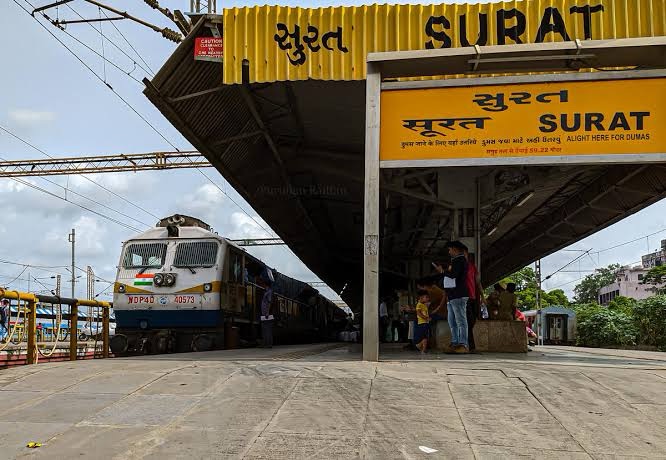
During a visit to Bhavnagar, Union Railway Minister Ashwini Vaishnaw announced that a Vande Bharat service between Bhavnagar and Surat is planned in the near future. State-level media report that the service “soon” will be operational between Bhavnagar and Surat, though station works at Surat could delay immediate launch. Local representation from Bhavnagar MP Nimuben Bambhaniya has affirmed the community demand for Vande Bharat connectivity to Surat.
Connectivity & Regional Growth
Linking Bhavnagar more directly to Surat an industrial, commercial hub boosts the logistics and passenger network. This route also strengthens Saurashtra’s link to South Gujarat, supporting economic growth, rail-infrastructure development and passenger convenience.
Benefits
For Passengers: Faster, more comfortable travel between Bhavnagar and Surat; day-return feasible; modern amenities. For Railways / Government: Advances the modernisation agenda of Indian Railways; shows investment outside major metro-corridors; better asset utilisation. For the Region: Stronger link between industrial centres; improved mobility; potential uplift in business/trade/commuting. For Infrastructure: Motivates upgrades to track-work, signalling, station facilities along the corridor.
Key Challenges & Considerations
Infrastructure Readiness: Track speed, signalling, station works especially at Surat must support higher average speeds. ABP news flagged that due to works at Surat station, the service cannot be launched immediately. Scheduling & Pathing: The corridor is already used by freight and other passenger services ensuring a clear path for a high-speed service is essential. Demand Forecasting: Premium services attract higher fares modelling demand on this corridor is essential. Operational Costs/Maintenance: Rolling stock allocation, maintenance facility support, crew training all factor into feasibility. Stop Pattern Trade-off: More halts = greater accessibility; fewer halts = faster journey need the right balance. Launch Timing: Given current station infrastructure works (e.g., at Surat), the “soon” timeframe requires realistic planning.
Outlook & Next Steps
According to official sources:
A survey and preparatory work for the Bhavnagar–Dholera new railway line has been approved, showing broader railway investment in this region. The announcement by the Minister at Bhavnagar (August 2025) flagged that the Vande Bharat option for Bhavnagar–Surat is being pursued.
Next steps might include:
Finalising the stop pattern and timetable. Confirming rolling stock allocation (Vande Bharat rake). Ensuring Surat station (and any stops) are fully ready for the service. Publicising the service and integrating ticketing/marketing. Setting a target launch window (e.g., after station-works completion).
Conclusion
The Bhavnagar ↔ Surat corridor is emerging as a strong candidate for a premium high-speed service like Vande Bharat. With official nods, demand signals and regional connectivity imperatives all aligning, the railways have a real opportunity to deliver substantial travel-time savings and service uplift. For stakeholders from passengers to businesses to regional planners, this is a promising development to watch.
Thane: Bullet Train Station Could Become a Game-Changer for Travel and Connectivity
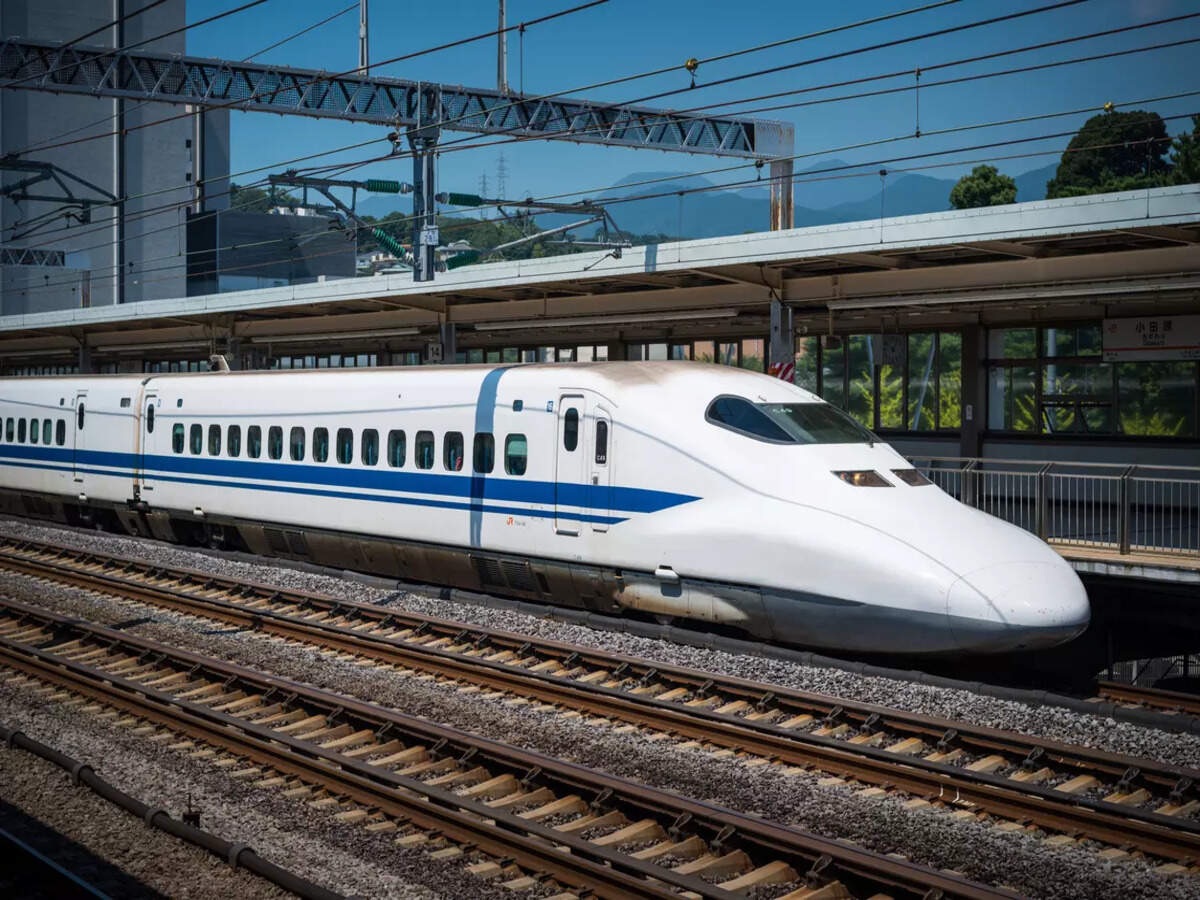
So, there’s a new high-speed bullet train station coming up in Thane, and the plan is to build it like the ones in Japan – with everything you need (offices, shops, transport, etc.) within walking distance. Basically, it’s going to be more than just a train station – more like a full-on transport hub.
There was a meeting about it earlier this week in Mumbai. Deputy CM Eknath Shinde, his principal secretary Naveen Sona, and people from Maharail and NHSRCL (the bullet train guys) were there.
A senior official at the meeting said the main goal is to make travel smoother across the Mumbai Metropolitan Region – especially for people coming from far-off suburbs like Navi Mumbai and beyond. They want to connect the bullet train station at Mhatardi with local trains and the metro so people don’t have to struggle with last-mile travel.
For starters, they’re looking at linking the station to Kopar, Diva, Thane, and Taloja metro stations – all nearby spots that could make travel easier. Even though the plan’s still in its early stages, experts think this could finally fix the current gap in connectivity. For example, people from Bhiwandi or Kalyan could use the Kopar station, while Diva and Thane stations could help connect Central Mumbai and the Ghodbunder side.
Officials from NHSRCL and Maharail haven’t said much yet, but Eknath Shinde confirmed that the bullet train authority has agreed to study the proposal before sending it to the Railway Ministry.
Experts are calling this a potential “goldmine” if it actually happens. But they also said the current transport system in that area is a mess and doesn’t even have proper infrastructure. So before anything, they’ll need to fix up what’s already there.