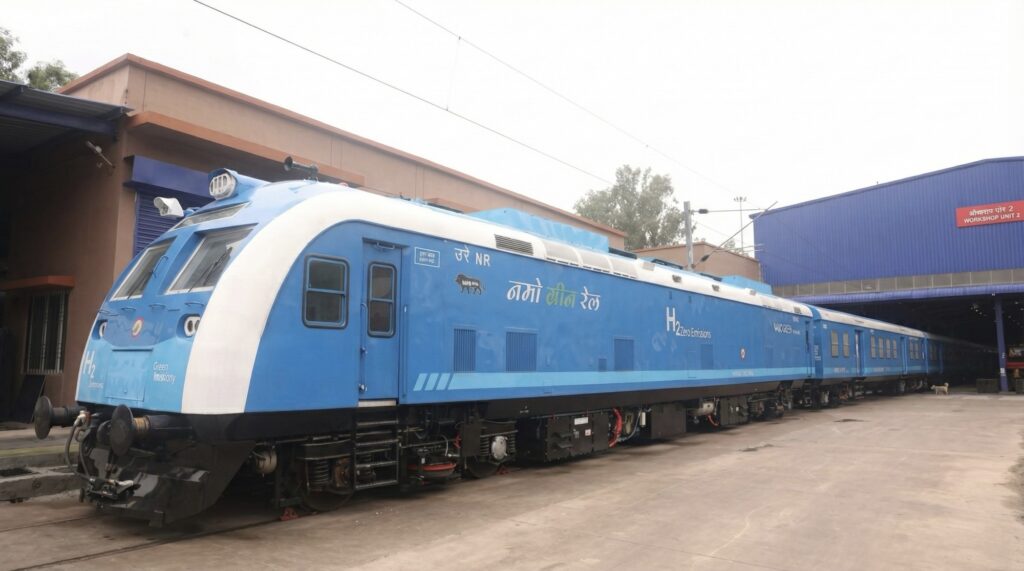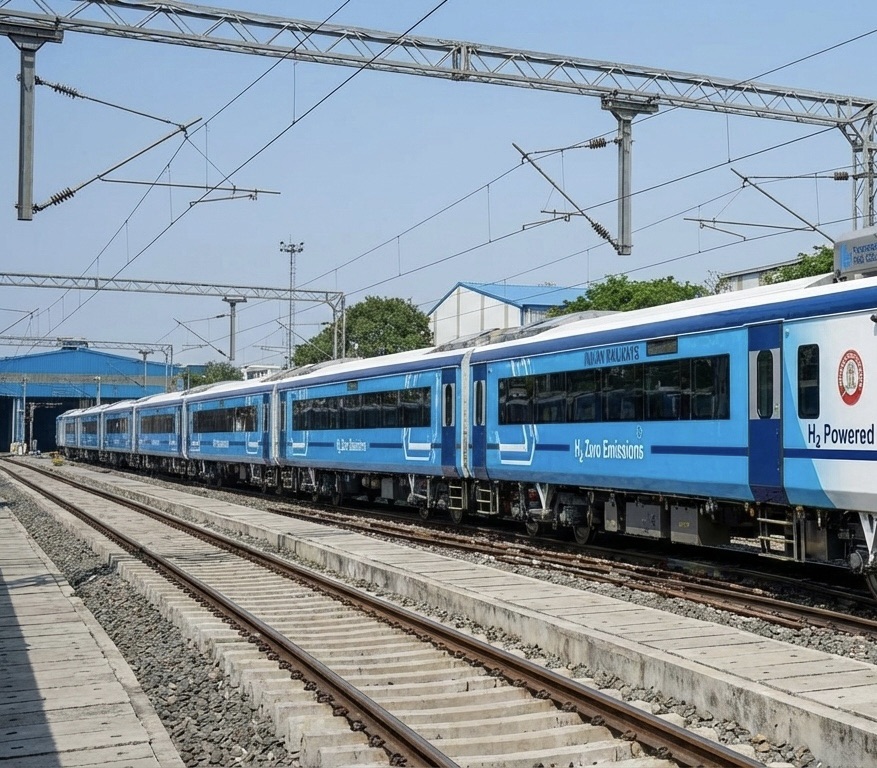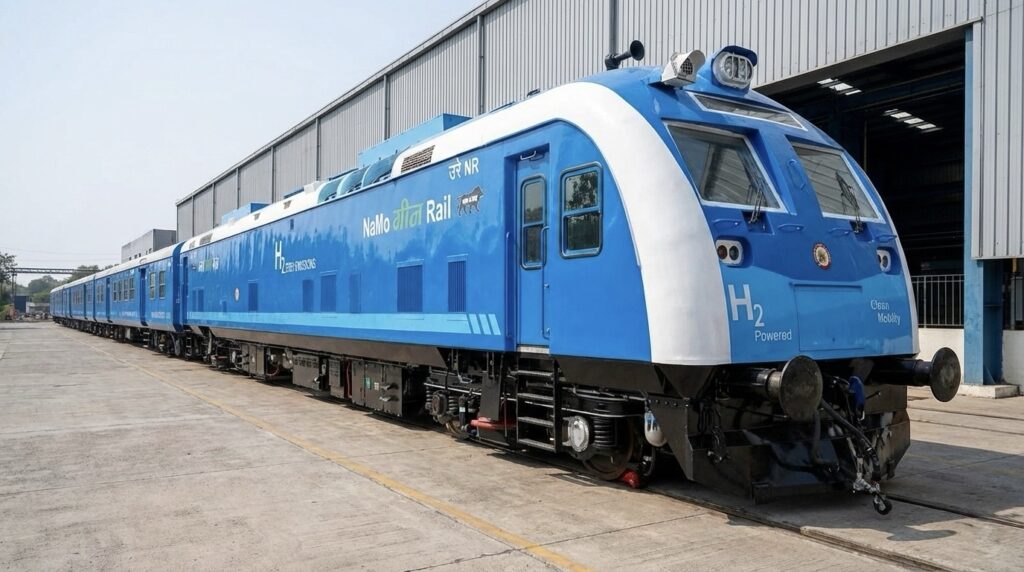

Indian Railways set to launch its first hydrogen-powered train, highlighting India’s self-reliance.
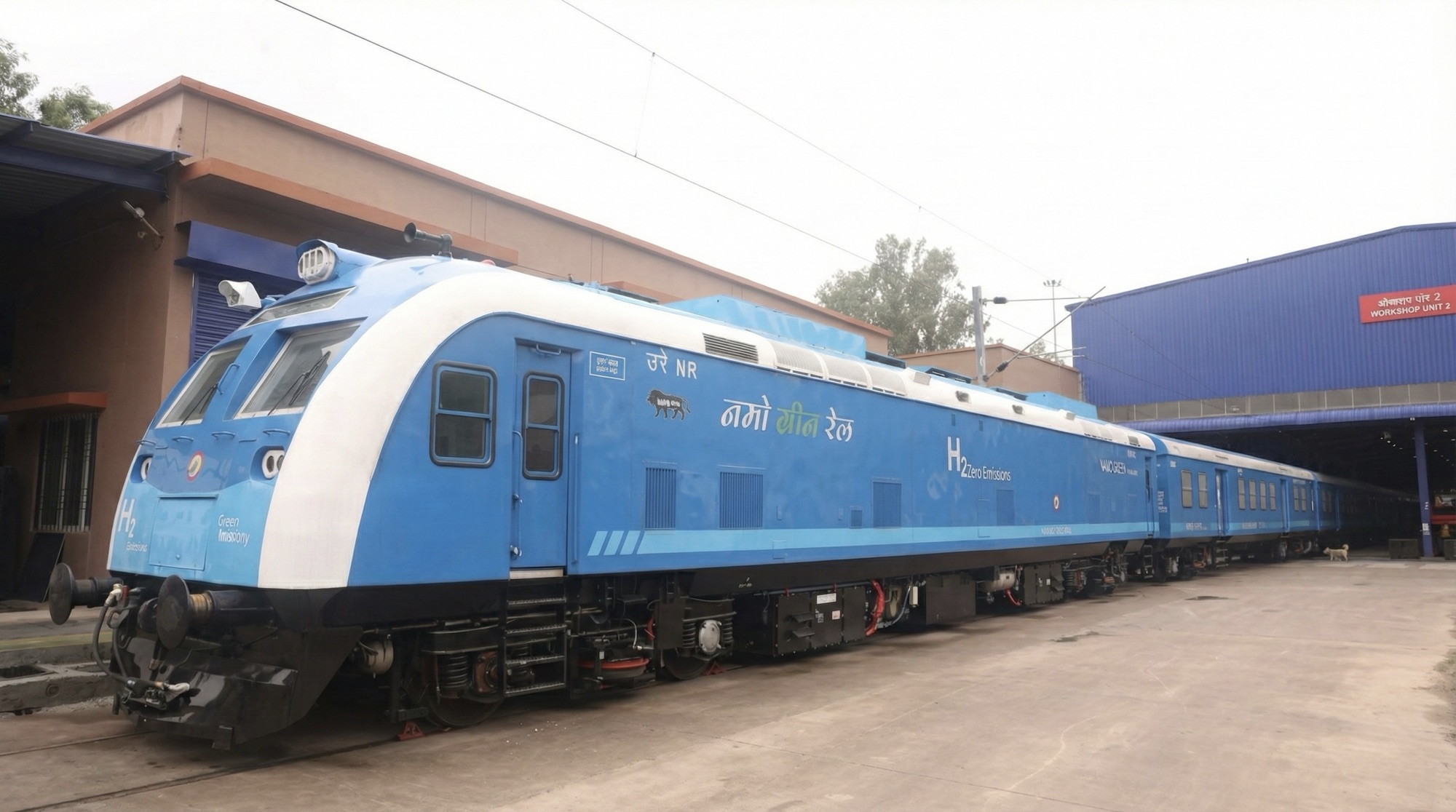
Indian Railways is set to introduce its first hydrogen-powered train, reflecting India’s progress in clean energy adoption and its commitment to the Atmanirbhar Bharat mission. This landmark initiative represents an important step towards developing environmentally friendly and self-reliant rail transport solutions. The hydrogen train has been developed as a pilot project to demonstrate the feasibility of using hydrogen as a clean fuel for future railway operations, following the standards formulated by the Research, Design & Standards Organisation (RDSO). Information regarding this development was shared by Railway Minister Ashwini Vaishnaw in the Lok Sabha.
The Minister stated that the manufacturing of India’s first hydrogen-powered train has now been fully completed. To support its operations, a dedicated hydrogen generation plant has been planned at Jind. This facility will produce hydrogen through the process of electrolysis, a key method for generating green and sustainable hydrogen fuel, ensuring an eco-friendly supply system for the train.
The hydrogen train-set has been entirely designed and developed within the country, highlighting Indian Railways’ strong push towards self-reliance under the Atmanirbhar Bharat initiative. The project showcases advanced indigenous technology and engineering capabilities, reinforcing India’s ability to develop modern and sustainable rail solutions independently.
According to the Minister, this hydrogen-powered train is currently the longest in the world on a broad-gauge network, consisting of ten coaches. It is also the most powerful hydrogen train globally, generating a total power output of 2400 kW. The configuration includes two driving power cars, each producing 1200 kW, along with eight passenger coaches, making it a significant technological achievement for Indian Railways.
A key highlight of the hydrogen train is its zero-emission operation. Since the train runs on hydrogen fuel, it does not emit carbon dioxide; instead, the only by-product released is water vapour. This makes it a highly eco-friendly alternative and an important step towards reducing pollution and lowering the environmental impact of rail transportation.
The Railway Minister emphasised that this project marks the beginning of next-generation fuel technology for Indian Railways. For the first time, the entire ecosystem—ranging from design and prototyping to the development of hydrogen-based traction systems—has been created indigenously. As this is a pilot initiative, he noted that comparing its cost with conventional train systems would not be appropriate at this stage.
Overall, the hydrogen train project highlights Indian Railways’ strong commitment to sustainable development and cleaner energy solutions. It sets the foundation for the future adoption of alternative fuels and represents a significant move towards building a greener, more environmentally responsible, and self-reliant rail transport system in India.