
Indian Railways announces fare hike effective December 26 – here’s what passengers need to know
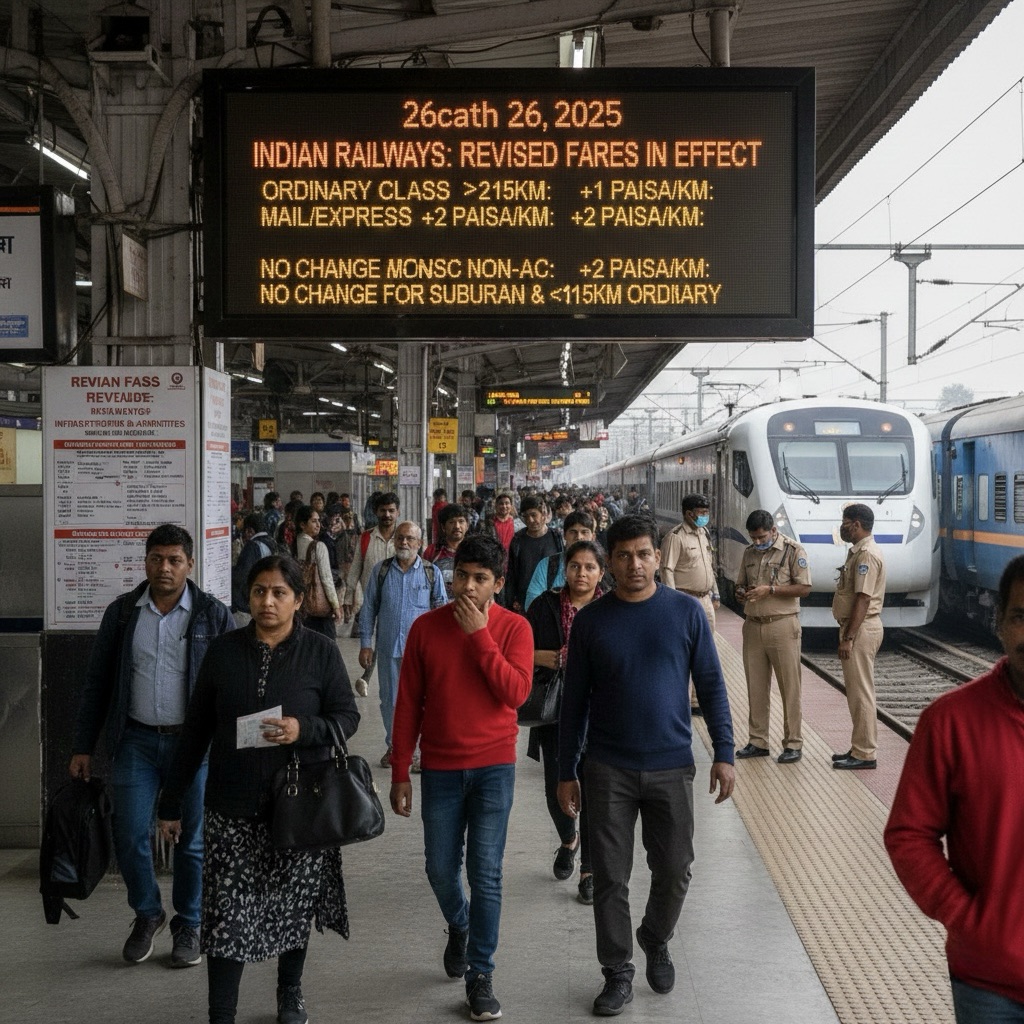
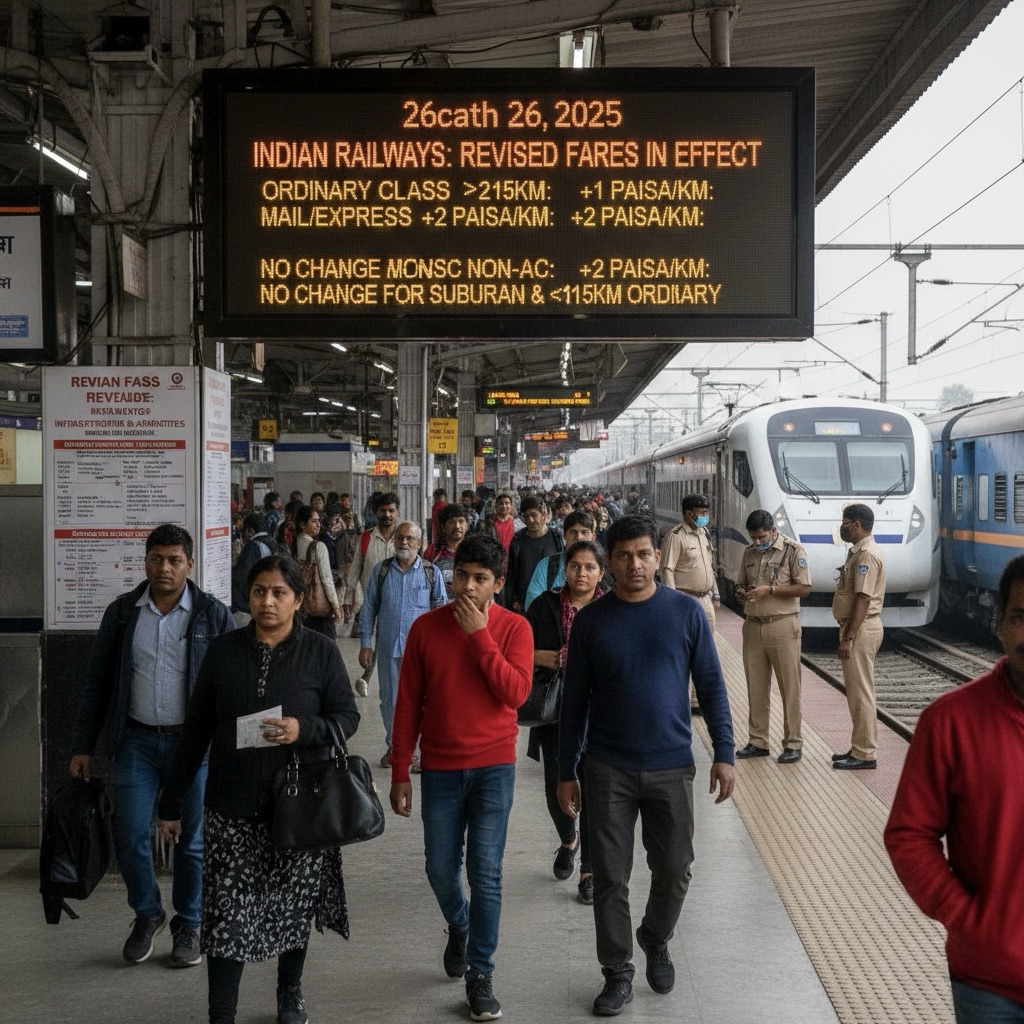
The Railway Ministry on Sunday announced a marginal increase in passenger train fares, which will come into effect from December 26, 2025.
As per the revised structure, ordinary class passengers travelling beyond 215 km will have to pay an additional 1 paise per kilometre. For Mail and Express trains, fares for non-AC classes will increase by 2 paise per kilometre, while the same 2 paise per kilometre hike will apply to all AC classes across trains.
The Ministry has clarified that there will be no fare increase for suburban train services. Additionally, passengers travelling up to 215 km in ordinary class on non-suburban routes will continue to pay the existing fares, offering relief to short-distance travellers and daily commuters.
Railway officials stated that this fare revision is expected to generate around ₹600 crore in additional revenue for Indian Railways between December 26, 2025 and March 31, 2026. The funds are likely to be used to support operational costs, infrastructure maintenance, and passenger amenities.
The Ministry also highlighted that the previous fare hike implemented in July 2025 has already resulted in approximately ₹700 crore in revenue, indicating a steady contribution from incremental fare adjustments.
Overall, while the hike is minimal on a per-kilometre basis, long-distance and AC travellers may notice a slight increase in ticket prices, whereas daily suburban and short-route passengers remain unaffected.