From December 1, Indian Railways Updates Ticket Booking Hours – Here Are the New Guidelines

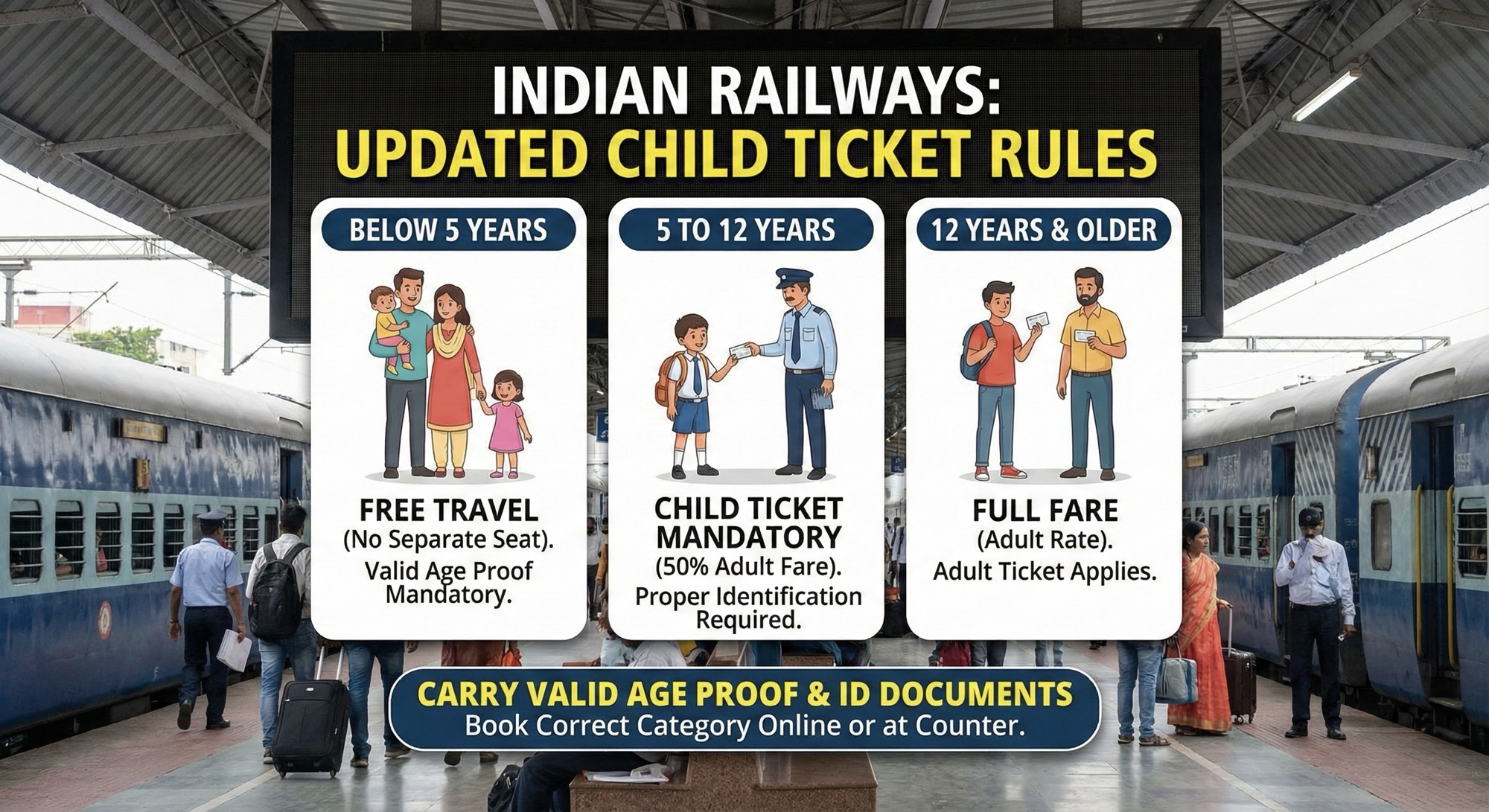
Indian Railways has updated its child ticket rules, bringing important changes for parents booking train tickets for their children. The new guidelines clearly define age categories, fare requirements, and necessary documentation, making it essential for families to understand these rules before travelling. The aim is to simplify the booking process while ensuring safety and fairness in fare collection.

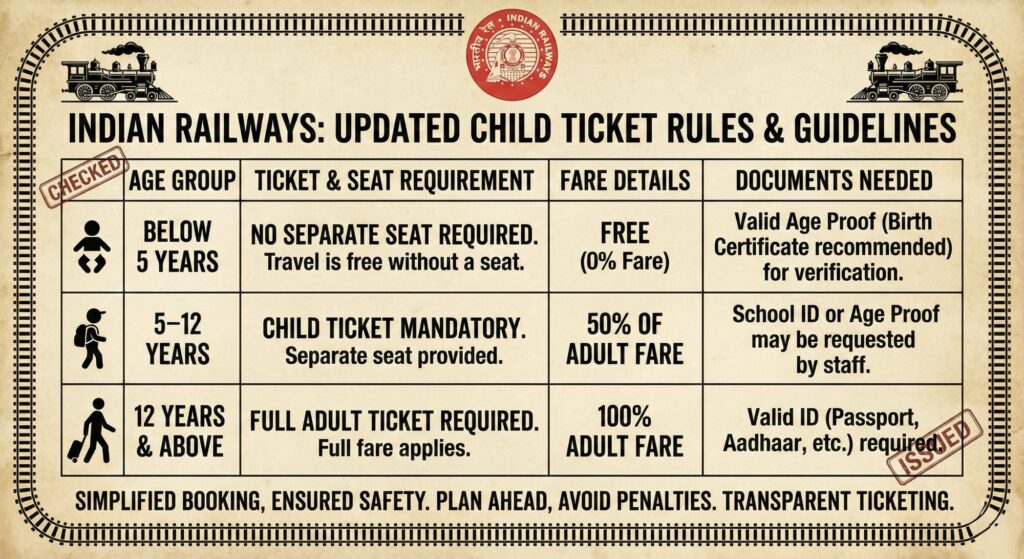
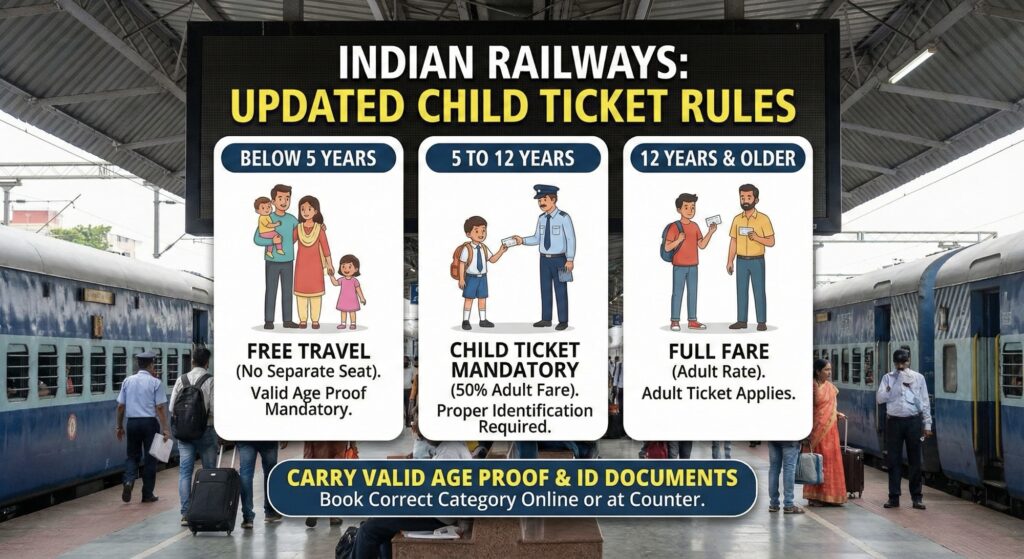
Under the revised rules, children below five years can travel for free without a separate seat, but parents must carry valid age proof to avoid issues during ticket inspection. For children aged five to twelve, a child ticket is mandatory and is priced at 50% of the adult fare, and railway staff may ask for proper identification. Anyone twelve years or older will be charged full fare as an adult.

Being aware of these regulations helps families avoid penalties or booking problems and ensures a smoother, safer journey for children. The changes are designed to prevent misuse of child concessions and maintain transparency in ticketing.

While booking, parents should carefully select the correct age category and ensure they have the appropriate ID documents for children, especially those above five years. Both online platforms and ticket counters have incorporated these updates, making it easier to choose the right fare. Planning ahead will help avoid confusion and ensure adherence to the new rules.
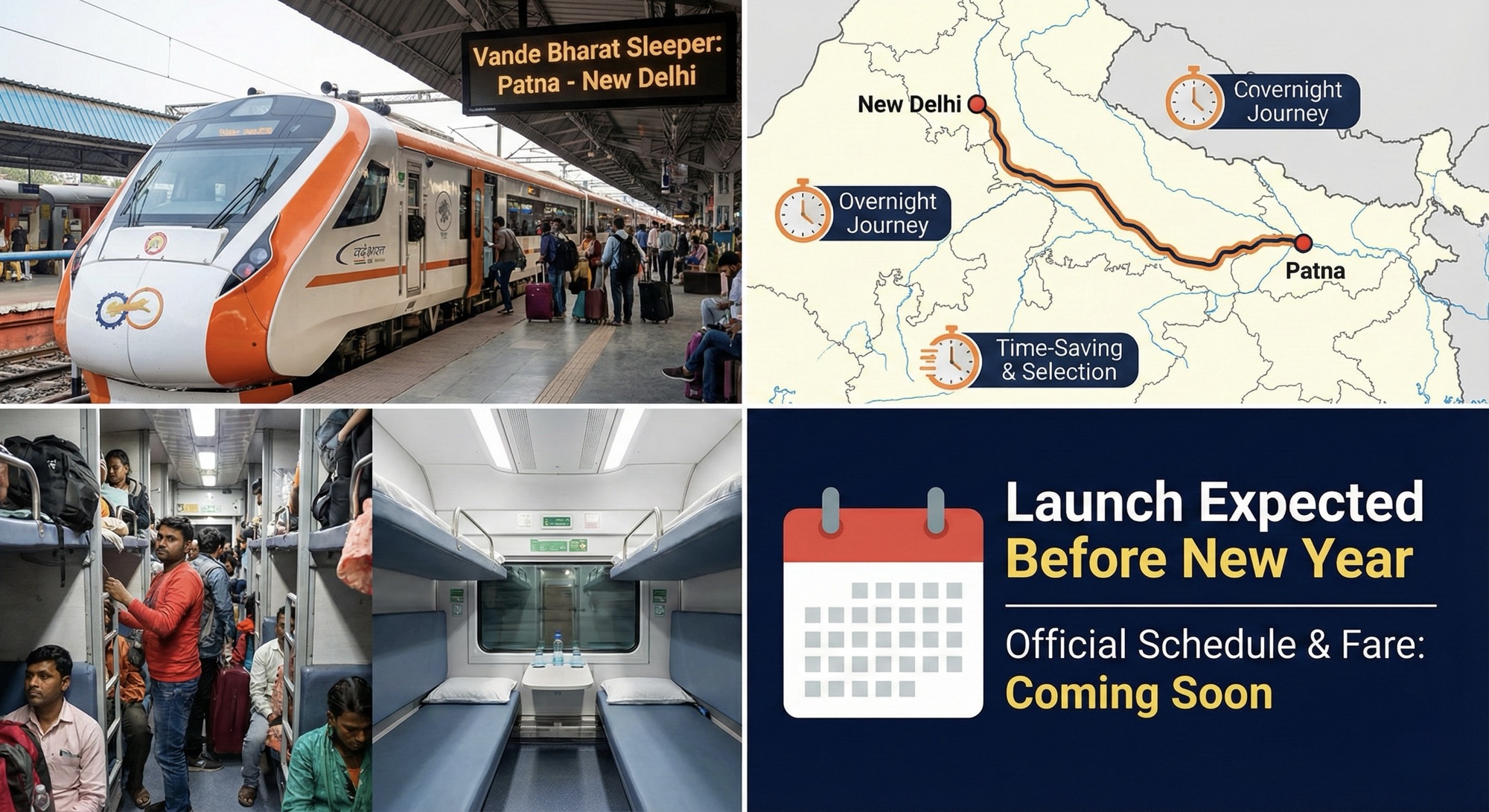
Patna–Delhi Vande Bharat sleeper to cover 1,000 km in just 8 hours – key highlights.

Indian Railways is preparing to introduce the first-ever sleeper edition of the Vande Bharat Express on the Patna–New Delhi route. This upgraded version is designed for overnight journeys and is expected to cover roughly 1,000 km in about eight hours, with operating speeds touching 160 km/h.

This marks a major shift from the current Vande Bharat fleet, which is primarily chair-car based. The new sleeper model focuses on long-distance comfort, offering padded berths, refined interiors, soft ambient lighting, touchless fittings, bio-vacuum toilets, and automated doors. The overall design aims to give passengers a hotel-like experience while travelling through the night.

Safety remains a priority, with features such as crash-optimised coaches, improved fire safety systems, CCTV surveillance, and an anti-collision mechanism built into the train.

The Patna–Delhi sleeper Vande Bharat is planned to operate six days a week and will run with a 16-coach configuration, providing ample berths on a route that sees consistently high demand. Although the Railways has not revealed the exact ticket pricing yet, the fare is expected to be comparable to premium services like the Rajdhani.

For travellers commuting between Bihar’s capital and the national capital, this service could significantly reduce travel fatigue. Passengers can board at night, rest comfortably, and reach their destination early the next morning eliminating the need for a hotel stay and cutting down total travel time. This will be especially beneficial during festive seasons, busy office trips, or sudden travel plans.

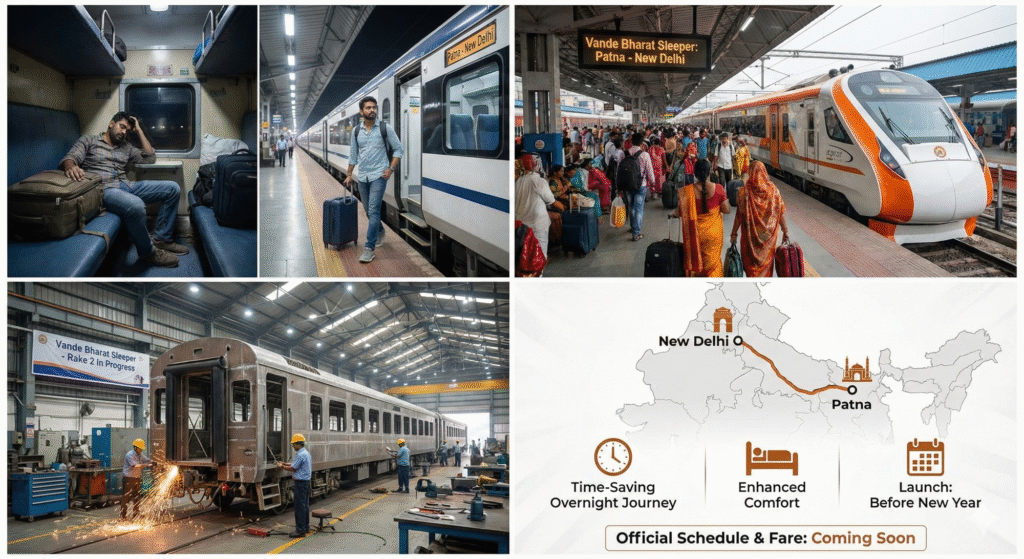
One rake has already finished its trial runs, while another set is reportedly under construction to ensure steady operations. The official timetable, fares, and complete route map are likely to be announced soon, with the launch expected before the New Year.

Patna–Delhi Vande Bharat sleeper to cover 1,000 km in just 8 hours – key highlights.

Indian Railways is preparing to introduce the first-ever sleeper edition of the Vande Bharat Express on the Patna–New Delhi route. This upgraded version is designed for overnight journeys and is expected to cover roughly 1,000 km in about eight hours, with operating speeds touching 160 km/h.

This marks a major shift from the current Vande Bharat fleet, which is primarily chair-car based. The new sleeper model focuses on long-distance comfort, offering padded berths, refined interiors, soft ambient lighting, touchless fittings, bio-vacuum toilets, and automated doors. The overall design aims to give passengers a hotel-like experience while travelling through the night.

Safety remains a priority, with features such as crash-optimised coaches, improved fire safety systems, CCTV surveillance, and an anti-collision mechanism built into the train.

The Patna–Delhi sleeper Vande Bharat is planned to operate six days a week and will run with a 16-coach configuration, providing ample berths on a route that sees consistently high demand. Although the Railways has not revealed the exact ticket pricing yet, the fare is expected to be comparable to premium services like the Rajdhani.

For travellers commuting between Bihar’s capital and the national capital, this service could significantly reduce travel fatigue. Passengers can board at night, rest comfortably, and reach their destination early the next morning eliminating the need for a hotel stay and cutting down total travel time. This will be especially beneficial during festive seasons, busy office trips, or sudden travel plans.

One rake has already finished its trial runs, while another set is reportedly under construction to ensure steady operations. The official timetable, fares, and complete route map are likely to be announced soon, with the launch expected before the New Year.